Match your wedding car to the overall mood of the celebration rather than trying to reproduce every colour in your flowers. Look at the venue, clothing, era and photography together. A small number of deliberate connections can make a vintage vehicle feel at home without turning the day into a period costume exercise.
Researched 20 October 2026. Statistics identify their reporting period.
Describe the mood before choosing an era
Begin with three words that describe the wedding you want: perhaps formal, intimate and understated, or playful, colourful and relaxed. Those words are more useful than a broad label such as vintage. They help distinguish a grand arrival from a light-hearted one and stop the car being chosen in isolation from everything else.
There is room for individual interpretation. Bridebook’s UK Wedding Report 2026, based on data from more than 7,000 UK couples, reports that 23% include second-hand or vintage details. That finding concerns wedding details generally, not car hire. Use it as evidence of personal styling choices, rather than a rule about what your wedding should look like.
Let the venue provide the visual setting
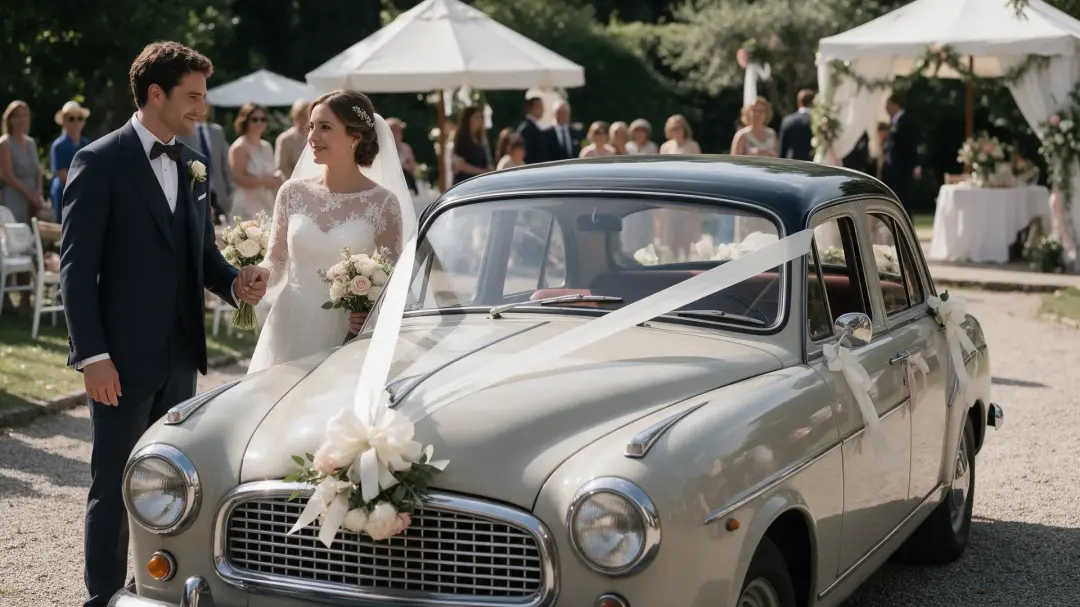
Consider the building where the car will be photographed. A formal entrance, sweeping drive or stone frontage can suit a car with a strong, upright presence. A smaller courtyard may look better with a less imposing silhouette. The point is proportion: a vehicle should sit comfortably within the scene rather than obscure the entrance or crowd the couple.
For a rural setting, examine the real surface and arrival space as well as the mood board. Gravel, narrow gates and uneven approaches are practical questions for the supplier. A car that looks perfect beside a barn in a photograph may not suit the particular track to your venue. Share entrance photographs before making the aesthetic decision final.
Use colour relationships instead of exact matches
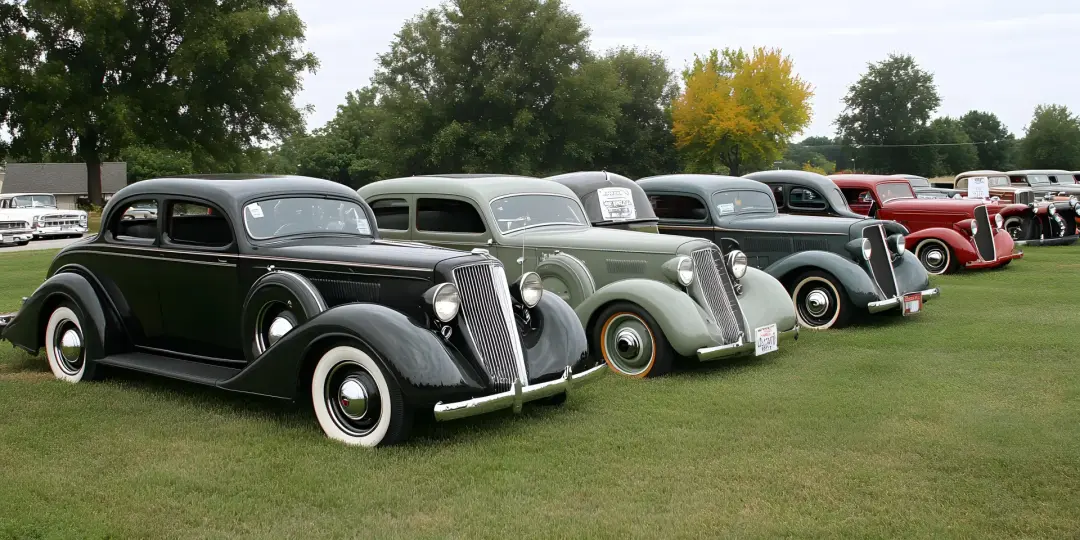
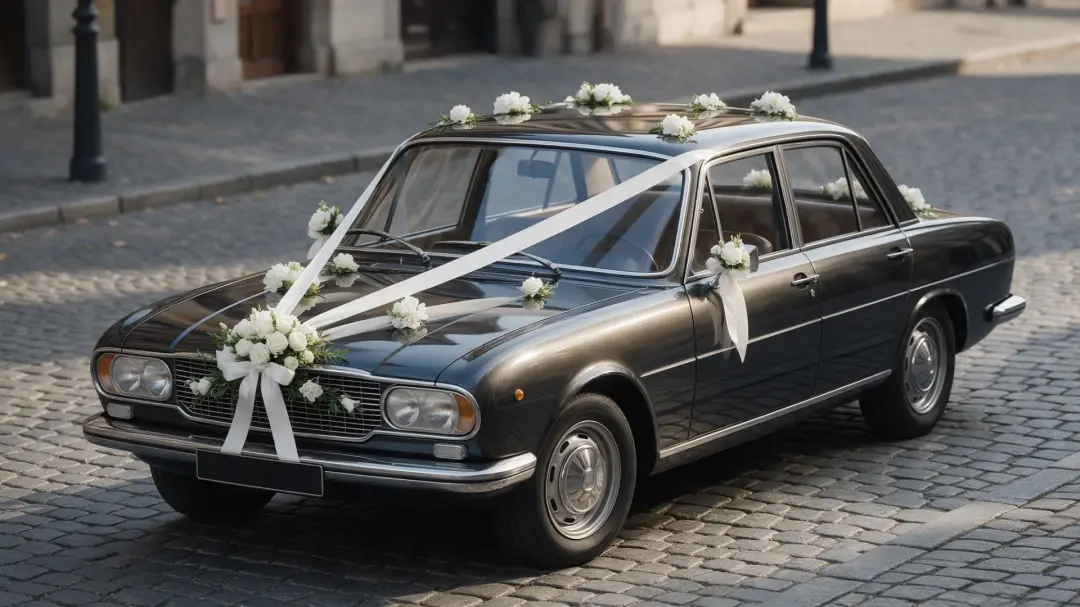
A white or ivory vehicle is not the only choice for a wedding. Dark paintwork can frame pale clothing, while a brighter car can provide a deliberate accent in a neutral celebration. Consider whether you want the car to blend into the background or become one of the main visual features in your photographs.
Put a recent photograph of the actual car next to your fabric and flower references. Screen settings and lighting change colours, so avoid relying on a tiny online thumbnail when subtle shades matter. The interior deserves attention too: upholstery may appear in doorway portraits and can influence the overall feel more than you expect.
Build a period reference without forcing it
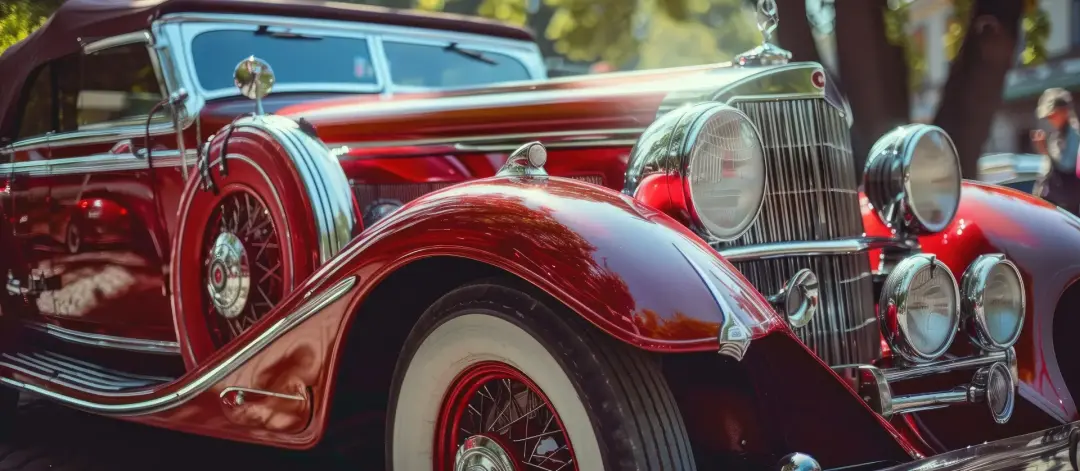
If you love an era, choose a few recognisable cues rather than matching every item to the same decade. A pre-war-inspired arrival might connect through tailoring, stationery or jewellery; a later classic might sit naturally with a shorter dress and simpler flowers. These are styling possibilities, not claims that a particular car is historically correct for every detail.
Look at the Bentley Derby Coupe 1934 as one example of a distinctive silhouette. Check the current vehicle photographs and availability before incorporating it into your plans. Ask yourself whether you still like the car when the themed accessories are removed; if you do, the choice is more likely to feel personal.
Keep decorations sympathetic to the vehicle
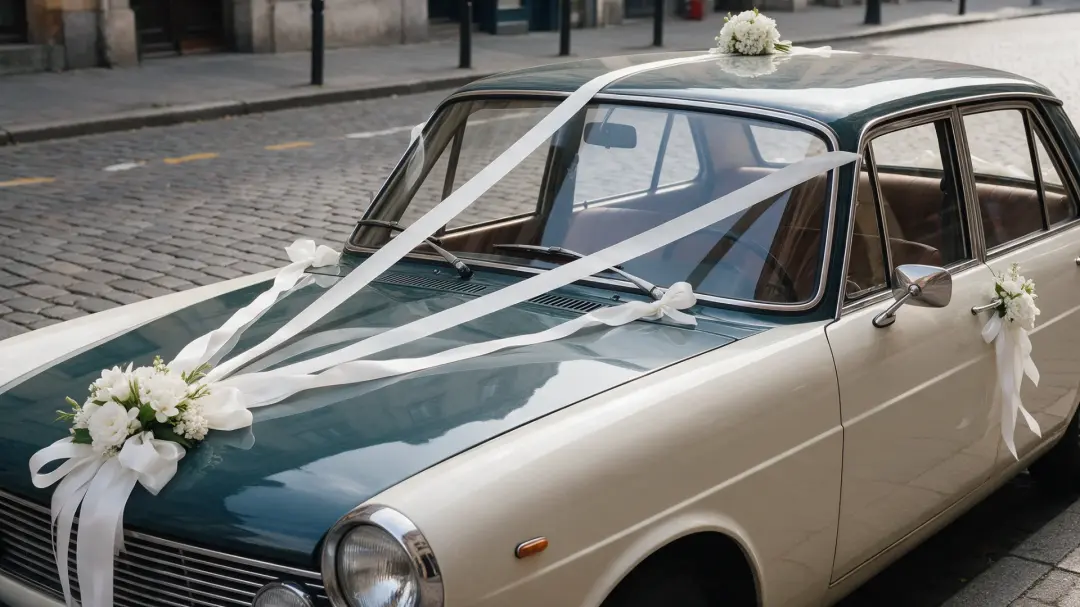
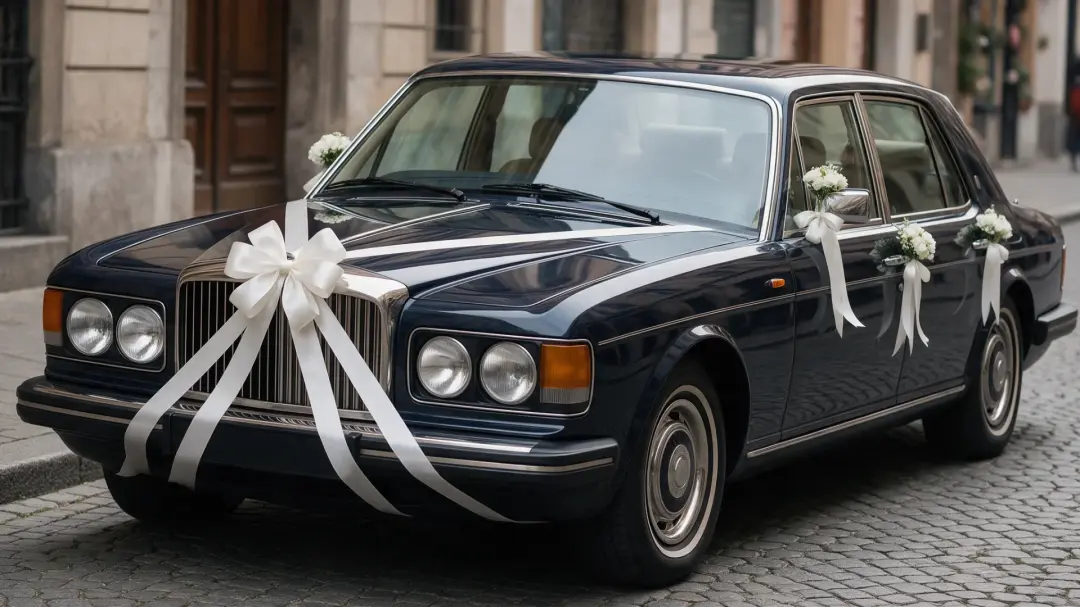
Ribbons, flowers and signs should complement the car without covering its features or distracting the driver. Ask the supplier what can be attached and who will fit it. Older paintwork and trim need care, and you should not assume that tape, magnets or a florist’s fixing method will be acceptable.
One restrained detail can be enough. A ribbon connected to your bouquet colour may create continuity without a large arrangement. If the vehicle has unusual doors, a fabric roof or prominent trim, discuss those features with the florist. Decorations should be agreed with the operator first, then designed around the approved attachment points.
Brief the photographer on the connection
Tell your photographer what attracted you to the car. Was it the roofline, the interior or the contrast with the venue? That helps them plan a few meaningful frames instead of treating the vehicle as a generic prop. Choose the location and time for those pictures with the driver, keeping the car stationary and access clear.
For a celebration around Grantham, VintageCars.co.uk can discuss the available vehicles while you share the visual direction. Prepare a small reference sheet showing the venue, clothing and one or two colour accents. Leave room for the photographer’s judgement about light and angles; a coherent mood is more achievable than copying a staged image exactly.
Test the complete visual scene
Before committing, make a simple five-image board: the venue entrance, your outfit, flowers, the car exterior and its interior. Check whether one element dominates for the wrong reason. You might find that a bright car is exactly the accent you wanted, or that a quieter colour allows the clothing and faces to remain the focus.
Then remove the decorative extras from the board. If the vehicle still belongs with the venue and clothing, the connection is strong enough. Share the board with your partner before suppliers see it so you agree on the direction. This is a decision aid, not a requirement to purchase matching accessories or recreate someone else’s wedding.
Summary
A well-matched wedding car shares the mood of your venue, clothing and photography without needing to match every detail. Choose an era and silhouette you enjoy, check the real colours, and agree modest decorations that respect the vehicle. The result should feel like part of your wedding rather than an unrelated display.